
The beginnings
Opus Dei began in England with the arrival in London of a young Spaniard called Juan Antonio Galarraga (1920-2005). The date was Saturday, 28th December 1946.
Juan had joined Opus Dei as a Numerary in Madrid in 1940, and in 1946, having completed a doctorate in pharmacy, he obtained a scholarship to continue research at London University.
The day after his arrival Juan went to Mass in Westminster Cathedral, and after that often met with the archbishop, Cardinal Griffin.
Two years later, Juan had been joined by two other Spanish Numeraries, José Antonio Sabater and José Luis González-Simancas. They lived in a small rented flat in Rutland Court, London SW7, and often used to visit Brompton Oratory to go to confession and hear Mass.
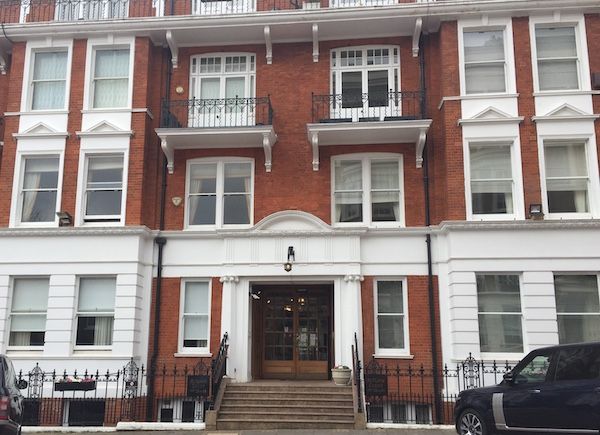
In October 1948, twenty-two months after Juan's arrival in England, Cardinal Griffin granted them permission to set up an oratory or a small chapel and reserve the Blessed Sacrament in the Rutland Court flat. A priest from Brompton Oratory said the first Mass in the little oratory on 26th October that year. And from then on one of the Oratorians would go each week to celebrate Mass and renew the Blessed Sacrament.
The Rutland Court flat was rented by Rafael Calvo-Serer (1916-1988), another Spanish Numerary who was working in England. It was Rafael who handled the correspondence between Saint Josemaría Escrivá in Rome and Cardinal Griffin for the setting up of the oratory.
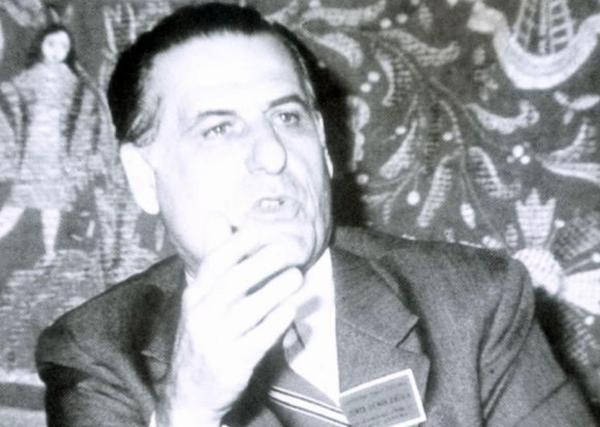
Rafael, who often travelled to Spain and France, was not able to be in England for the first Mass in the new oratory. He later returned to Spain and became the editor of the daily newspaper Madrid. He was subsequently exiled because of his anti-Franco stance and went to live in France.
In 1951 José Antonio Sabater and José Luis González-Simancas left England to help start Gaztelueta School in Bilbao. This was to be the first secondary school set up as a corporate undertaking by Opus Dei.
Other Numeraries came to England from Spain to replace them. Among them was Richard Stork (1930-2021), who arrived on 16th March 1951 to start an engineering degree at London University. Richard's father was a Scottish Presbyterian who had settled and married in Spain. During the Spanish Civil War (1936-1939) the couple and their children became evacuees and lived in London. Soon after the end of the war they returned to Spain, which was where Richard Stork met Opus Dei. In April 1950 he joined as a Numerary, and from that moment on was very keen to return to London to help with the development of Opus Dei in England.
Meanwhile a law student called Michael Richards had come to know Opus Dei while studying at University College London. He became the first person to ask to join Opus Dei as a Numerary in England.
In the summer of 1951, Juan Galarraga went to Rome to see Saint Josemaría Escrivá, the founder of Opus Dei. He came back to England with a plan to set up a students' hall of residence in London. With Michael Richards, he acquired a house near Finchley Road in north London, 18 Netherhall Gardens. They moved in on 4th April 1952 and this was the beginning of what is now the Netherhall House complex.
The first women of Opus Dei arrived in London on 15th June 1952. They were Spanish Numeraries and Assistant Numeraries and they included among their number Ester Toranzo and María Rivas. The women were soon in regular contact with the Irish women Numeraries who were starting Opus Dei in Dublin.
A house with its own oratory and the Blessed Sacrament had been made ready for the women when they arrived in England. It was called The Cottage, Netherhall Gardens. With their help, Netherhall House was opened as an international and intercollegiate hall of residence with capacity for 40 students. Two years later, with the aid of Westminster Diocese, an adjoining property, 16 Netherhall Gardens, was also acquired. Netherhall House could now take up to 80 students.
In July 1956 some of the women moved in to Rosecroft House, in Hampstead, and set this up as a residence for women students.
Saint Josemaría in the UK
Saint Josemaría came and stayed in London for five consecutive summers, from 1958 to 1962. In the peace and quiet of England he was to work on documents and new projects, as well as seeing his spiritual daughters and sons in Great Britain.
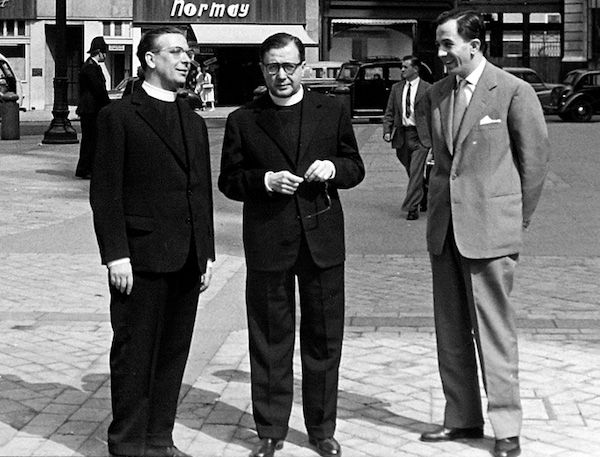
When he first came in 1958, there were only three centres of Opus Dei in the country, one for men and two for women, all of them in London.
During that first stay in 1958, Saint Josemaría was very keen for a centre of Opus Dei to be opened as soon as possible in Oxford. What he had in mind was to set up the equivalent of the colegios mayores which were a feature of university life in Spain. These are a combination of hall of residence and tutorial college, offering educational and cultural courses in tandem with the university degree courses. However, there was no room in the British university system for such a venture.
Eventually, through Monsignor Gordon Wheeler, then the Administrator of Westminster Cathedral, a suitable property for a centre was found. It was Grandpont House, situated in the south of Oxford but in the territory of the diocese of Portsmouth. The Catholic hierarchy of England and Wales had had an option to buy the house but had decided against purchasing it. In 1959, with the encouragement of Cardinal Godfrey of Westminster and Archbishop King of Portsmouth, Opus Dei went ahead and set up a centre there for apostolate with men.

On his first visit to England, Saint Josemaría also went to see The Cottage, and had a family get-together with the women of the Work living there. He was very concerned about the lack of facilities, especially the shortage of rooms. (In the earliest years some of the residents had to sleep on the floor in the sitting room, rolling up their blankets every morning and leaving them in a bedroom upstairs.) The Founder told them they would have a purpose-built residence and catering wing, with more rooms. Work on this project started very soon after he returned to Rome.
Saint Josemaría sent the women a triptych for The Cottage's oratory, a copy of a Memling painting showing Our Lady and the Child Jesus surrounded by angels. The painting was brought to England by Michael Richards, who had been ordained and was the first English priest of Opus Dei.
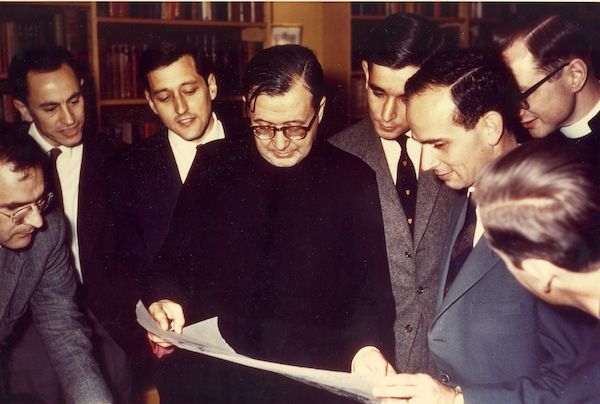
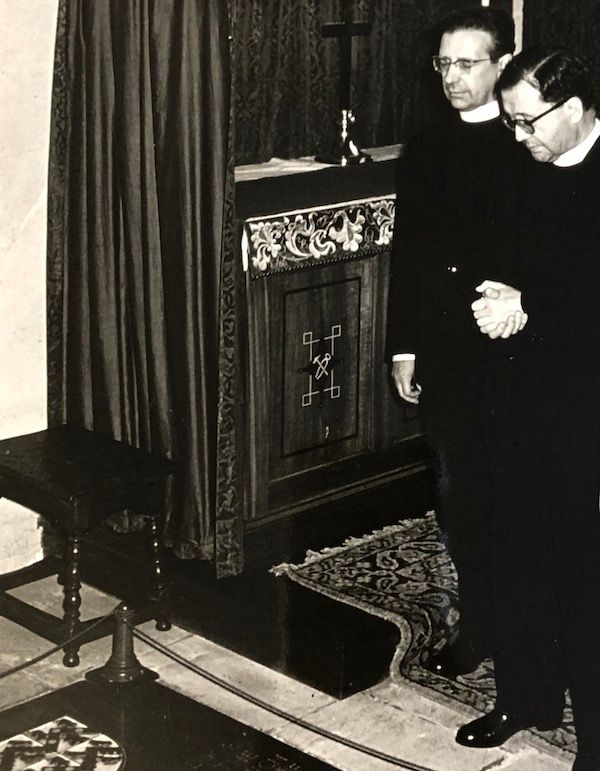
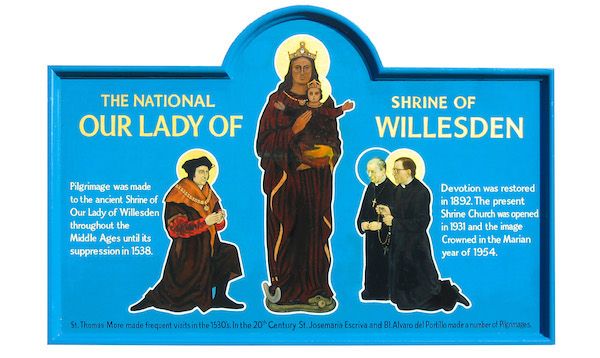
On 15th August 1958, St Josemaria renewed the Consecration of Opus Dei to the Most Sweet Heart of Mary at the shrine of Our Lady of Willesden, in north-west London.
Also on that first visit, on 11th September 1958, Saint Josemaria visited Cumberland House in Kensington, where the women had rented a flat for three years and had a family gathering with the people there. He talked to them, among other things, about keeping close to the Good Shepherd at all times.
The founder also encouraged his children to spread out and go to other cities, such as Manchester, where he made a one-day visit in August 1959, and met the Bishop of Salford, George Beck. That same year a centre for men was opened in Lapwing Lane, Manchester, followed soon after by another students' hall of residence, Greygarth Hall, close to Manchester University
In January 1960 a hall of residence for women students, called Rydalwood, was opened in Didsbury, south Manchester.
By the time of Saint Josemaría's last stay in Britain in 1962, the headquarters for the men of Opus Dei in Britain had been moved to Orme Court, near Queensway, in West London, where it remains to this day.
To Other Countries
During his summers in London, Saint Josemaría also made plans to start the Work in Kenya and Japan, and a number of men and women from England and Ireland joined people from other countries to begin the apostolate of Opus Dei in these two countries.

Jeremy White, who had come into contact with Opus Dei at Netherhall House, was one of the teachers who went to Kenya to teach at Strathmore College, a new sixth-form college and Africa's first multi-racial school, which was set up by Opus Dei. In 1965 Jeremy went on to start the stable apostolic work of Opus Dei in Nigeria, and remained there until his death in 1990. Already during his lifetime he had enjoyed a reputation for holiness, and many people are praying that the process for his canonisation be opened soon.
Maire Burke was an Irish Associate, and the sister of the first two Numeraries in Ireland (Fr Cormac Burke and Teddy Burke). She taught at a school in Folkestone, where she met Kathleen Purcell, also Irish, who joined Opus Dei as a Numerary and went to study in the College of Holy Mary in Rome. Afterwards Kathleen returned to work in London and in 1960 she set off with a small group of Opus Dei women to start the apostolate in Japan.
St Josemaría and his daughters
During the summers he was in England, 1958 to 1962, Saint Josemaría had frequent family get-togethers with groups of his daughters. After one such meeting, on 15th August 1961, he renewed the Consecration of Opus Dei to the Most Sweet Heart of Mary. One of the people present was an expert short-hand writer and took down what he said. The homily was afterwards revised by Saint Josemaría, and was published in Christ is Passing By with the title “Our Lady Cause of our Joy".

In 1962 the hall of residence for women students moved from Rosecroft in Hampstead to Ashwell House in Notting Hill Gate. Saint Josemaría visited the house on 1st August when it was being decorated. He told his daughters that he knew they would set it up very well and do a lot of apostolate in and from it. He went there again on 3rd September and had a get-together with Numeraries, and then with a group of the first Supernumeraries, including Anne Scott and Jadwiga Osostowicz.
Conference centres
St Josemaría encouraged his daughters in Britain to set up conference centres where people of Opus Dei could provide, and attend, spiritual retreats, short courses on the teaching of the Church, conferences, study courses, and so on. In 1964 they moved into Wickenden Manor in Sussex, about thirty miles south of London. (They realised later that Wickenden Manor had been visited by Saint Josemaría and Blessed Alvaro in 1958, with a view to setting it up as an international conference centre, though that plan had never come to fruition.) In the years since 1964 Wickenden Manor has provided hundreds of Christian formational activities for lay people and diocesan priests, from both Britain and abroad.

Expansion
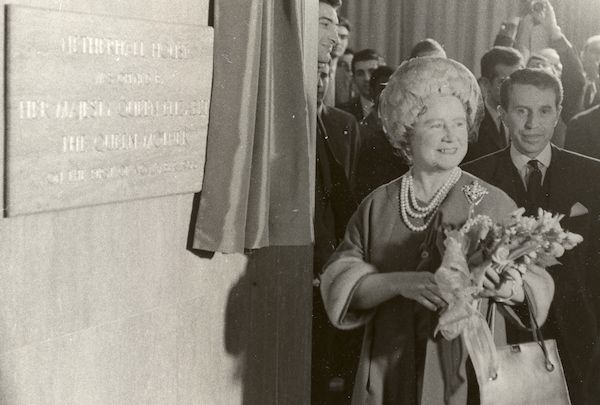
St Josemaría also encouraged the British members of Opus Dei to use the extensive gardens of 16 and 18 Netherhall Gardens for the construction of new buildings to house a larger purpose-built students' hall of residence, especially for the many students from Commonwealth countries coming to study in London, plus a hospitality training centre. The building and fundraising took some years, but by November 1966 the buildings were completed. Queen Elizabeth, the Queen Mother, as Chancellor of London University, opened the new Netherhall House, as well as the Lakefield Centre for Hospitality Training, which was built on adjacent land in Maresfield Gardens.
Between October 1966 and July 1968 Rosecroft was used as the national headquarters of the women in Opus Dei, and as a centre where younger Opus Dei people could study in greater depth the faith and the teachings of the Church, and the specific charism and practice of Opus Dei.
In 1966 Father Josemaría asked Richard Stork, who was now a priest of Opus Dei, to be the Counsellor, that is the person in charge, in Britain. To help him, Father José María Hernández Garnica (1913-1972), one of the first priests of Opus Dei, came to Britain for a year, during which he taught those first courses of formation in Rosecroft House (1966-67).
In 1964, Kelston club for schoolboys was set up in Wandsworth, in the south of London, by some students staying at Netherhall House.

When Dawliffe Hall was acquired on the Chelsea Embankment in October 1968, Rosecroft was sold. Saint Josemaría never saw Dawliffe Hall, but was very pleased with what he was told about it. The triptych he had sent for The Cottage after his first visit there in 1958 became a reredos for the altar in Dawliffe Hall's oratory.
Father Michael Richards was invited to be chaplain of the University of Wales at Bangor, and accepted the position. To begin with there was no centre of Opus Dei in Bangor, but people of Opus Dei travelled there weekly from Manchester to do apostolate with the university students. In 1968 a house called Derwen Deg was acquired, offering accommodation to a small number of women students, and a range of activities. During the vacations it was also used for conferences and short courses. However, Derwen Deg closed in 1974. Father Richards continued to work in Bangor until his death in 1977.
In 1973 a centre called Thornhill was opened in Bramhall, south of Manchester, offering Christian cultural and formational activities for married women, and a club for local schoolgirls. In 1974 a new centre for the apostolate with women was opened in Ealing, West London, and called Woodlands, after one of the houses in which Saint Josemaría had stayed during his visits to Britain.
Death of Saint Josemaría
St Josemaría, the founder of Opus Dei, died in Rome on 26th June 1975, and in September of the same year Father Alvaro del Portillo, who had accompanied him on his trips to Britain, was elected to succeed him as the head of Opus Dei. A solemn requiem Mass was celebrated for Monsignor Josemaría Escrivá in Westminster Cathedral that summer.
The building next door to Dawliffe Hall, Shelley House, was acquired in 1976, and joined to Dawliffe Hall. For apostolic work with students and married women, a large oratory was prepared in the best room on the ground floor of Shelley House. A Youth Club called Tamezin was begun and flourished there for many years until it moved to other locations and centres of Opus Dei.
In 1976 a new tradition of celebrating Requiem Masses on the anniversary of the death of St Josemaría began. Many family members, friends and acquaintances of people of Opus Dei attended.
After Monsignor Escrivá was beatified in 1992 these became Masses in honour of the new Blessed, and, after his canonisation in 2002, in honour of the new Saint. Masses are now said around his feast day (26th June) every year, in various cities in Britain.
A conference centre to provide the same sort of activities in the northern half of the country as Wickenden Manor was doing in the south was set up near Macclesfield, south of Manchester. At first it was called Siddington Manor, but later reverted to its original name of Thornycroft Hall. In 1978 an Opus Dei centre called Winton was opened in Oxford for apostolate with students and married women
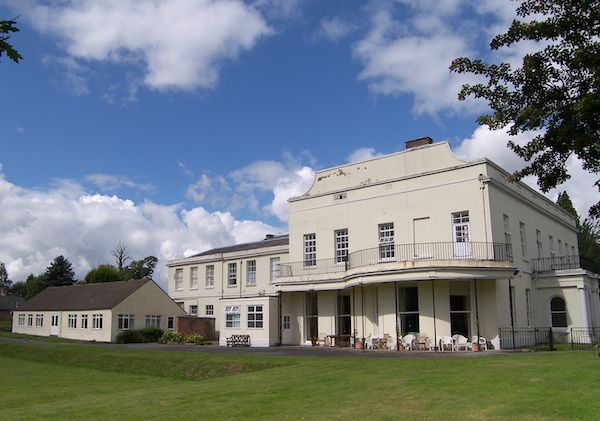
Blessed Alvaro del Portillo
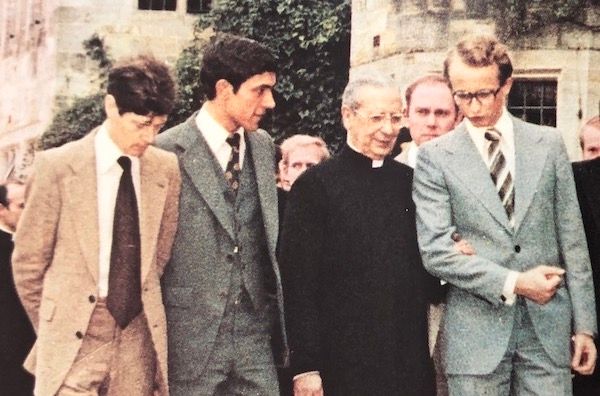
Blessed Alvaro del Portillo came to England as head of Opus Dei in July and August 1980. He met as many of his daughters and sons in Great Britain as possible. He went to a large gathering of people of Opus Dei and friends in University College School, London. He also had an open-air get-together in Thornycroft Hall on 24th August, which was recorded on video. He visited the shrine of Our Lady of Willesden in north-west London, where he had gone with Saint Josemaría on one of his first visits to this country. Everywhere he went he showed people how to live out their faith and spread it to others.
He encouraged his children to spread the apostolate to Scotland, starting with Glasgow. They began making regular journeys there straight away, meeting old friends and making new ones. A centre for men called Dunreath was set up in the West End of Glasgow in 1982, and later moved to the South Side. In 1983 Glenalvon, a centre for women, was opened in Kelvinside.
At the beginning of 1981 some determined attacks on Opus Dei, its founder and the people who belonged to it, appeared in one of the national newspapers, and were quickly taken up by other newspapers and sections of the media. The people of Opus Dei did what they could to provide access to the facts. In response to widespread concern, Cardinal Basil Hume of Westminster issued some guidelines on how the people of Opus Dei should invite those who might have a vocation, to join it. These guidelines brought into the public domain what was in fact already practised. Cardinal Hume maintained close contact with the people of Opus Dei, and seventeen years later celebrated a public Mass in commemoration of Opus Dei's seventieth anniversary.
Other centres
In 1990 Ashwell House residence for students was transferred to a much larger site near the City of London. In the Residence there is a wall hanging which depicts the City and has the words “Here too we shall sow peace and joy in abundance". This recalls a locution heard by Saint Josemaría one day while walking through the City of London and feeling very weak in the face of such great institutions reflecting human power, wealth and influence. He then heard the words: “You can't, but I can. Here too we shall sow peace and joy in abundance."
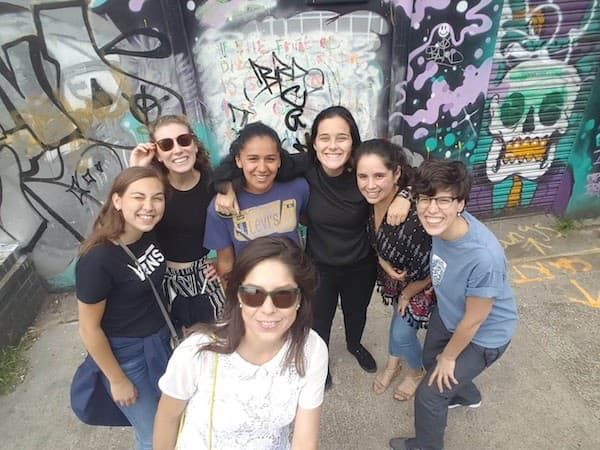
Ashwell House organizes seminars and concerts, invites guest speakers and sets up round tables and debates. Students also help run homework clubs for schoolchildren in disadvantaged areas, soup-kitchens for down-and-outs, and short-term development projects overseas during vacations.
A flat known as Crosmore is also used in the City of London where activities such as monthly days of recollections and weekday meetings are held for men working in that financial and business area.
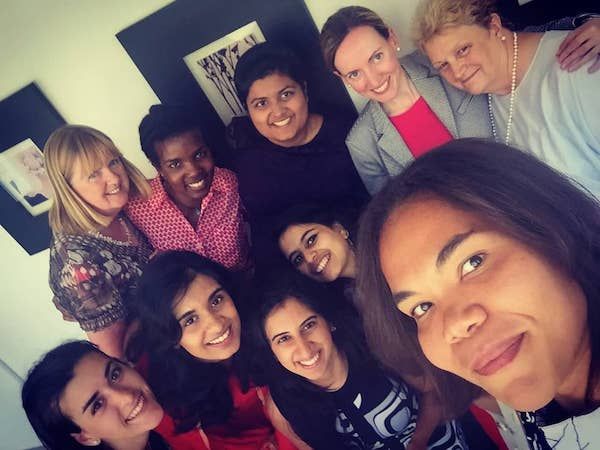
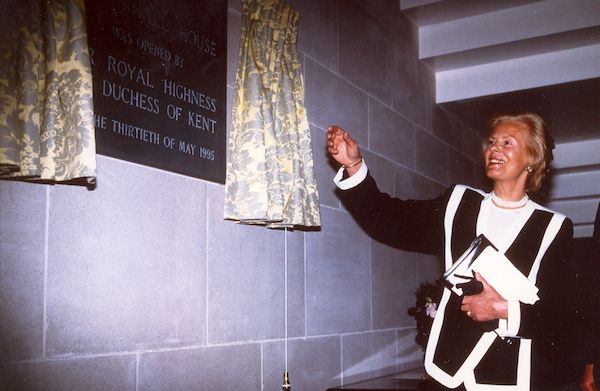
Coniston Hall, a hall of residence for women students at the universities in Manchester, started in 1993, with an adjoining centre of Hospitality Training called Ashley. And in 1995, there was a further enlargement of Netherhall House and Lakefield in London, which was officially opened by the Duchess of Kent.
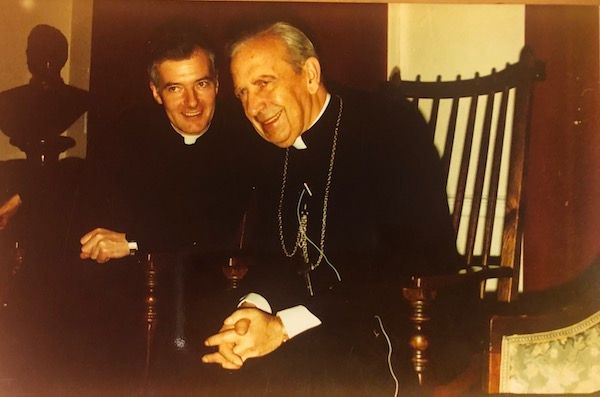
Mgr Philip Sherrington, who had succeeded Monsignor Richard Stork as Regional Counsellor of Opus Dei in Britain in 1976 (the name Regional Counsellor changing to Regional Vicar in 1982) died tragically in a climbing accident in Ireland on 27th February 1995. Bishop Javier Echevarría, who had succeeded Bishop Alvaro del Portillo as the Prelate, came from Rome to celebrate his funeral Mass.
To mark the seventieth anniversary of the founding of Opus Dei Cardinal Hume, on 2nd October 1998, celebrated Mass in Saint James's Church, Spanish Place, London. With him at the altar were the Regional Vicar of Opus Dei, Monsignor Nicholas Morrish, and other priests of the Prelature and nearby dioceses. The Cardinal started his homily by saying: “It was on this feast day in 1928, when the founder of Opus Dei understood that he was to urge men – and indeed of course women as well – in all walks of life to seek holiness, and carry out an apostolate in the midst of the world, through the exercise of their profession or trade, without change of life. No change of life; but surely always a change of heart!"
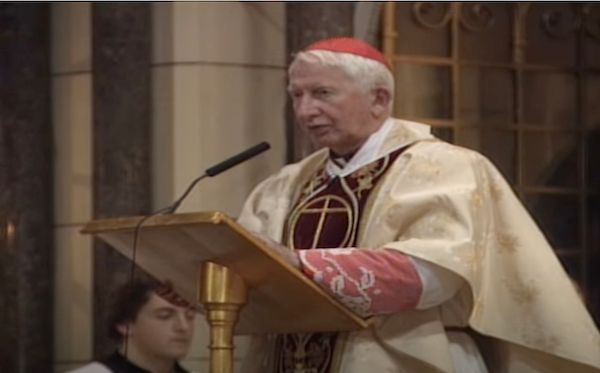
And he continued, "But already these words, 70 years ago, anticipated the Vatican Council's Decree on the place and the role of the laity in the world: the laity to live out their lives and to grow in holiness. And that chapter five of the Church's Constitution, Lumen Gentium, on the call to be holy, was perhaps one of the most important statements of the Vatican Council – and maybe, unfortunately, the least known. The universal call to holiness! In order to be equipped, to be able to carry out the mission of the Church, to live out that other great Constitution of the Council, the role of the Church in the world, Gaudium et Spes, giving us the principles of how to witness and how to engage in activity."
In 2005 the Archbishop of Westminster, Cardinal Cormac Murphy O'Connor, asked Opus Dei to take over the parish of Saint Thomas More in north-west London. Father Stefan Hnylycia, a priest of the Prelature, is currently the parish priest.
In 2003 a new conference centre, Hazelwood House, was opened in Scotland. The house dates back to the mid-16th Century standing in grounds of what was once Dumbreck Priory, and has had a multiplicity of uses, most recently an old people's home. After some years of use as a retreat centre for Opus Dei, extensive works were carried out and the centre reopened in October 2010, this time with residential staff. The staff run a girls' club in the site and also take part in several student volunteering projects in Glasgow.
There are now 24 centres in 4 cities: London, Manchester, Oxford and Glasgow. Members of Opus Dei live and work in many other places, and activities are held in places such as Ashford, Birmingham, Bristol, Cambridge, Cardiff, Edinburgh, Folkestone, Ipswich, Jersey, Leeds, Mansfield, St Albans and Sheffield.
Schools
In 1996, some members of Opus Dei, together with cooperators and friends, opened a primary school in Purley called Oakwood and set up PACT (Parents Children and Teachers), an educational charity to run it and set up further schools. Some years later, in 2013, PACT started two secondary schools: The Cedars in Croydon and The Laurels in Clapham. In the summer of 2021, the two secondary schools moved to a much larger site in Upper Norwood side by side, where they have been able to take more pupils and expand their facilities. At the same time, Oakwood moved to the Lloyd Park site in Croydon. Opus Dei provides chaplains to these schools and helps out in the religious education given to the pupils.
Social and cultural projects
Also inspired by Saint Josemaría's promotion of Christian social responsibilities, a number of faithful of the Prelature and their friends in Great Britain are actively involved in educational activities that provide assistance to the underprivileged and immigrants, while developing an awareness of the value of service among the participants. A centre in Brixton, South London, where valuable social work with women and girls of ethnic minorities is carried out was started in 1991, called Baytree. In January 2003 Princess Anne visited Baytree Centre, saw many of the activities being held there at that time, and spoke to immigrant women and girls who had benefited from Baytree's existence.
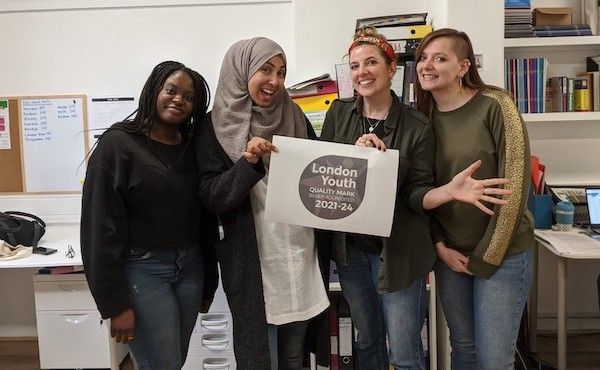
In Manchester, Glasgow and London, a programme called “Citywise" gathers together a number of volunteers, who work for a few hours every week with children from disadvantaged backgrounds. “GOAL" (Get-On-And-Learn) is another project that has run for a number of years in Hackney, London.
Social service projects in developing countries are now organised each summer by different centres of Opus Dei. Recent projects have been held in Kenya, Mexico, Nicaragua and Romania.